Robert Kiyosaki, the author of "Rich Dad Poor Dad," has once again laid out the wealth preservation formula he says has guided him for more than six decades, tying it directly to a stark warning about the trajectory of the United States national debt. In a post on X, the financial commentator traced a timeline of asset accumulation that long predates cryptocurrency and has only recently expanded to include it.
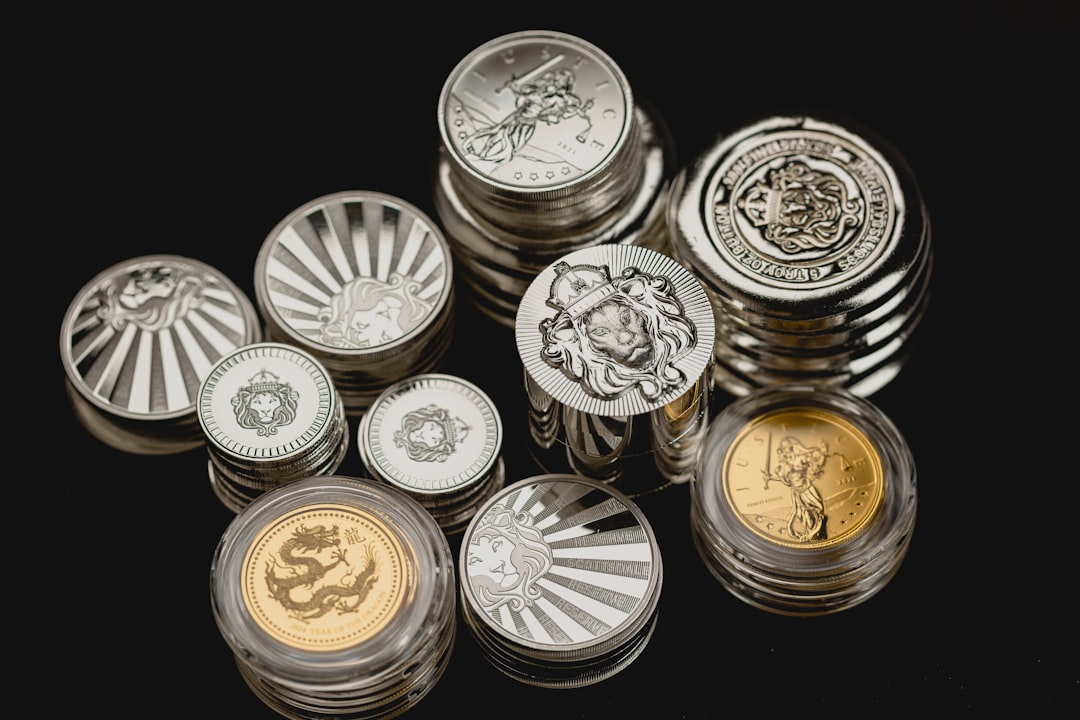
Kiyosaki wrote that since 1965 he has saved real silver, since 1971 he has saved real gold, since 2012 he has saved Bitcoin, and since 2022 he has saved Ethereum, framing the sequence around his broader Rich Dad principle that wealthy individuals avoid holding cash and instead accumulate assets that resist inflation and confiscation.
A Debt-Driven Rationale
Kiyosaki tied his renewed defense of hard assets to alarming figures on federal borrowing. He noted that US debt sat near $9.5 trillion in 2008, just before the global financial crisis, and has since more than quadrupled, with the total reaching $39.64 trillion as of July 22. Separately, other figures circulating around his commentary put national debt at a record $39.5 trillion, having surged by $3.2 trillion over the prior 12 months, which works out to roughly $8.8 billion added per day even without an active crisis.
HOW MUCH DEBT?
— Robert Kiyosaki (@theRealKiyosaki) July 25, 2026
FYI: In 2008, just before the GFC: (Great Financial Crisis) the US debt was approximately $9.5 trillion.
Today, just as US Bonds are crashing, US Debt is approaching
$39 trillion.
Q: If you spent $1 a minute how long would it take you to spend $1 trillion?…
The author has repeatedly used such figures to argue that government money creation is unsustainable. He claimed the government effectively prints roughly $1 trillion every 90 days, a scale he illustrated by noting that spending $1 trillion at a rate of $1 per minute would take about 32,000 years. This debt arithmetic forms the backbone of his long-running argument that dollars, bonds, and other instruments requiring "trust" in institutions are vulnerable, while scarce, hard-to-print assets are not.
From Precious Metals to Digital Scarcity
Kiyosaki's asset preferences have evolved over time even as the underlying logic has stayed consistent. He has long rejected saving in fiat currency, holding to the Rich Dad principle that wealthy people don't save money but instead invest in assets that resist inflation and confiscation. His entry into precious metals dates back decades before Bitcoin existed, and he has said his early silver buying was driven by the belief that government-issued money loses purchasing power over time, and that hard, scarce assets hold value across generations.
Related: WhiteBIT Coin, Hyperliquid, Tron Eye Record Highs This Weekend
That same reasoning eventually extended to digital assets. His crypto allocation marks a real evolution in his thinking: having long promoted gold and silver as sound money, he now describes Bitcoin as a decentralized alternative to endless printing, centered on its fixed cap of 21 million coins. He has separately argued that gold's supply can theoretically expand if prices climb high enough to justify more mining, whereas Bitcoin's hard-coded limit cannot be altered by rising demand — a distinction he has called central to his conviction.
Ethereum entered his portfolio more recently, rounding out what he now frequently refers to as a basket of four core holdings alongside oil and, at times, food and other commodities. Ethereum complements the position through smart contracts and its expanding role across decentralized finance and other blockchain-based applications, according to his stated reasoning.
How and Where He Stores It
Kiyosaki has also been specific about custody. He keeps his metals holdings outside conventional banking channels, and he keeps gold and silver in Swiss vaults outside Switzerland, citing cases where Washington banned private gold ownership and seized holdings — a reference to the US government's historical restrictions on private gold ownership in the 20th century. That same distrust of centralized custody and confiscation risk underpins his attraction to Bitcoin, which he has previously described as "people's money" independent of central bank control.
Mixed Track Record, Consistent Message
Kiyosaki's long history of dire economic warnings has drawn plenty of skepticism, with critics noting that his repeated predictions of imminent collapse have often failed to materialize on the timelines he suggested. Even so, his multi-decade positioning in silver and gold has posted real gains: the S&P 500, with dividends reinvested over the past roughly 61 years, has returned about 400 times its starting value, outpacing silver's roughly 63-fold price gain over the same period — a reminder that even his best-performing hard asset has lagged broad equity markets over the very long run, even as it has recently outperformed in shorter stretches.
Whatever the eventual scorecard, Kiyosaki's latest breakdown of his 1965-1971-2012-2022 accumulation timeline reinforces a message he has delivered consistently for years: favor scarce, hard-to-debase assets over cash and paper instruments tied to government promises. As US debt figures continue to climb toward the $40 trillion mark, he has signaled no intention of altering that approach.