Highlights
- Sam Bankman-Fried has petitioned the US Supreme Court to overturn his FTX fraud conviction and secure a new trial.
- He is also asking the court to throw out an $11 billion restitution order tied to his sentencing.
- The petition follows a June 2026 loss at the Second Circuit Court of Appeals, which unanimously upheld his conviction and 25-year sentence.
- His argument centers on how prosecutors were allowed to use evidence of economic loss under a recently adopted “fraudulent inducement” legal theory.
Sam Bankman-Fried, the former FTX chief executive serving a 25-year sentence for defrauding customers of the collapsed crypto exchange, has asked the US Supreme Court to grant him a new trial and void an $11 billion restitution order handed down at sentencing. The petition marks his latest and highest-court attempt to unwind a conviction that has already survived one full round of appellate review. In June 2026, the Second Circuit Court of Appeals unanimously rejected his bid to overturn the verdict, upholding both the fraud conviction and the 25-year prison term imposed in 2024 after prosecutors showed he had directed billions of dollars in customer funds from FTX to Alameda Research, the trading firm he also controlled, where the money was used for risky investments, political donations and personal spending.
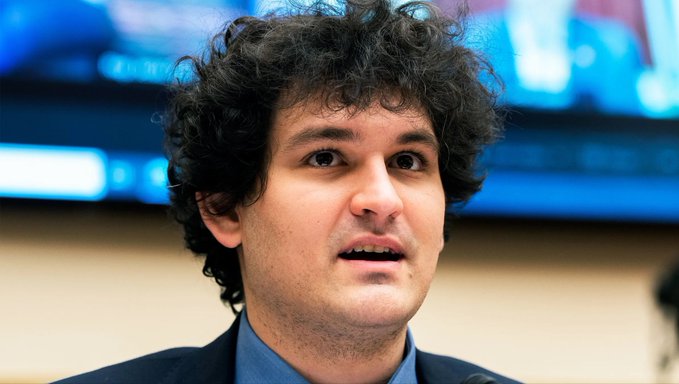
The legal theory underpinning Bankman-Fried's Supreme Court petition is narrower and more technical than his earlier appeals. CNN reported that his argument turns on a “fraudulent inducement” standard the Supreme Court itself embraced in a separate ruling last year, which holds that prosecutors do not need to prove actual economic loss to secure a fraud conviction. Bankman-Fried's filing argues that if prosecutors are permitted to bring charges without demonstrating loss, then admitting evidence of loss at trial — as happened in his case — creates an unfair asymmetry, since the defense should then be equally free to introduce evidence cutting the other way. It's a procedural argument aimed less at his guilt or innocence outright and more at how the trial record was shaped under a legal standard that has itself evolved since his 2023 indictment.
A Supreme Court review, even if only at the certiorari stage, keeps one of crypto's most consequential fraud cases in the news cycle just as Washington works through the CLARITY Act and other market-structure legislation aimed at preventing a repeat of FTX-style customer-fund commingling. The $11 billion restitution figure Bankman-Fried is contesting remains one of the largest in the history of US financial fraud prosecutions, and its outcome will matter directly to former FTX customers and creditors still working through the exchange's bankruptcy estate. The case also continues to serve as a reference point in ongoing debates over exchange custody rules and disclosure requirements, echoing through unrelated proceedings such as Celsius founder Alex Mashinsky's own bid to vacate his 12-year sentence, another closely watched crypto-fraud case working through the appeals process in parallel.
Related: Georgia Man Deported From Fiji Over Alleged $165M Crypto Ponzi Scheme
The Supreme Court is expected to review the appeal later this year, starting with the threshold question of whether to grant certiorari at all — a step the vast majority of petitions never clear. If the justices decline to hear the case, Bankman-Fried's conviction and sentence stand as final, exhausting his realistic appellate options. If they do take it up, the ruling could reshape how prosecutors handle loss evidence in future white-collar fraud cases well beyond crypto, making this one of the more closely watched criminal-procedure petitions on the court's docket this term, alongside other high-profile crypto-fraud proceedings like the first-ever Bitcoin RICO case nearing its own conclusion.
FAQ
What is Sam Bankman-Fried asking the Supreme Court to do?
He is asking for a new trial and for the court to throw out an $11 billion restitution order tied to his 25-year sentence for defrauding FTX customers.
Did Bankman-Fried already lose an appeal?
Yes — the Second Circuit Court of Appeals unanimously upheld his conviction and sentence in June 2026 before this Supreme Court petition was filed.
What legal argument is he making?
His petition argues that if prosecutors don't need to prove economic loss to bring fraud charges under a “fraudulent inducement” theory, they also shouldn't be allowed to introduce loss evidence at trial without letting the defense do the same.
When will the Supreme Court decide whether to hear the case?
The court is expected to review the petition later this year, starting with whether to grant certiorari — the first procedural step most petitions do not clear.