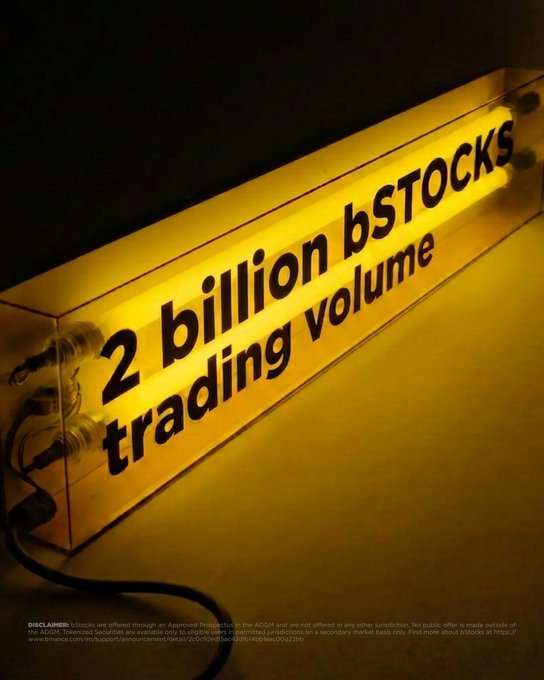
Binance disclosed that its tokenized stock offering, bStocks, processed $2 billion in trading volume over the course of a single weekend, a figure the exchange highlighted as evidence that demand for round-the-clock equity trading extends well beyond traditional market hours.
The exchange's announcement, posted on its official account, tied the volume figure directly to the appeal of weekend access: "24/7, the charts never rest." Unlike conventional stock exchanges, which close on Saturdays and Sundays, tokenized equity products built on blockchain rails can be traded continuously, letting users react to news or price moves without waiting for Monday's opening bell.
Tokenized Equities Gaining Traction
bStocks lets Binance users gain price exposure to publicly traded companies through blockchain-based tokens rather than direct share ownership. The $2 billion weekend figure suggests meaningful trader appetite for this format, particularly among users who want to react to overnight news, earnings leaks, or macro developments that land outside standard trading hours.
The timing is notable given a broader wave of tokenized-stock activity across the exchange sector this week, with several platforms including Bybit, MEXC and KuCoin's Web3 Wallet separately rolling out perpetual futures tied to newly listed equities such as China's CXMT. That flurry of activity points to tokenized stock products becoming a more central battleground among exchanges competing for trading volume.
Related: How Crypto's 24/7 Markets Are Rewiring Wall Street's Weekends
What It Means for Market Structure
Weekend trading volume of this scale on a single product line signals that the line between crypto-native trading habits and traditional equity markets continues to blur. Retail traders accustomed to nonstop crypto markets appear increasingly willing to apply that same behavior to equity exposure, a trend that could pressure traditional brokerages to reconsider their own market-hour limitations over time.
Binance did not break down the $2 billion figure by specific stock or provide comparative data from prior weekends, so it remains unclear whether this represents a new high or part of a consistent trend for the product line.