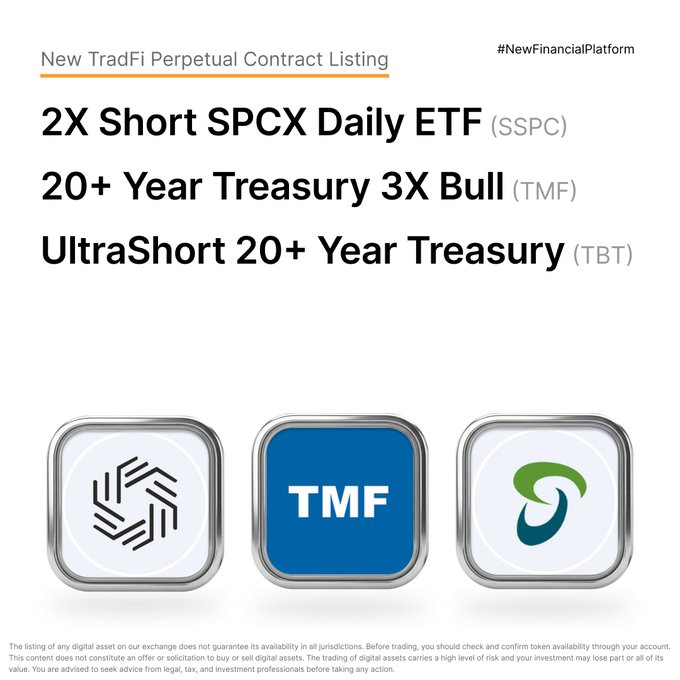
Bybit has expanded its TradFi perpetual contract offering with three new listings: SSPCUSDT, TMFUSDT and TBTUSDT, all of which the exchange confirmed are now live for trading. The contracts give crypto-native traders leveraged exposure to instruments tracking traditional financial benchmarks without leaving Bybit's derivatives platform.
Based on their tickers, the new perpetuals track products already familiar to traditional markets: an S&P 500-linked contract in SSPC, and TMF and TBT, both tied to U.S. Treasury-focused exchange-traded products. Packaging them as USDT-settled perpetuals lets traders take directional or leveraged positions on equity-index and rates exposure using the same account and collateral they already use for crypto derivatives.
Part of a Broader TradFi Push
The listings extend a trend among major exchanges toward offering tokenized access to traditional financial products, following similar moves into stock and commodity derivatives elsewhere in the industry this year. By adding Treasury-linked and equity-index perpetuals alongside its existing crypto contracts, Bybit is positioning its platform as a single venue where traders can express views across both crypto-native and legacy-market assets.
The exchange did not attach any promotional incentive, such as a deposit bonus or trading contest, to the launch, framing it as a straightforward product expansion rather than a marketing campaign.
These additions extend Bybit's presence in the tokenized-TradFi category covered in our reporting on tokenized equity trading's 800% year-to-date surge, part of a broader race among exchanges to offer round-the-clock synthetic exposure to traditional market instruments alongside crypto-native assets.
FAQ
What kinds of assets do TradFi perpetual contracts typically track?
They can track a wide range of traditional finance instruments — individual stocks, ETFs, bond funds, and other conventional securities — giving crypto traders synthetic price exposure without needing a traditional brokerage account.