The Federal Reserve decides on interest rates this Wednesday, and on paper the outcome looks like a formality. Almost every economist surveyed expects no change. Traders, watching the same data, are far less convinced.
That disagreement matters for crypto. If the Fed surprises markets, stocks, bonds, oil and Bitcoin all tend to move quickly. Bitcoin was trading near $64,915 on Monday, up 0.7% on the day and roughly 49% below its October 2025 record of $126,080.
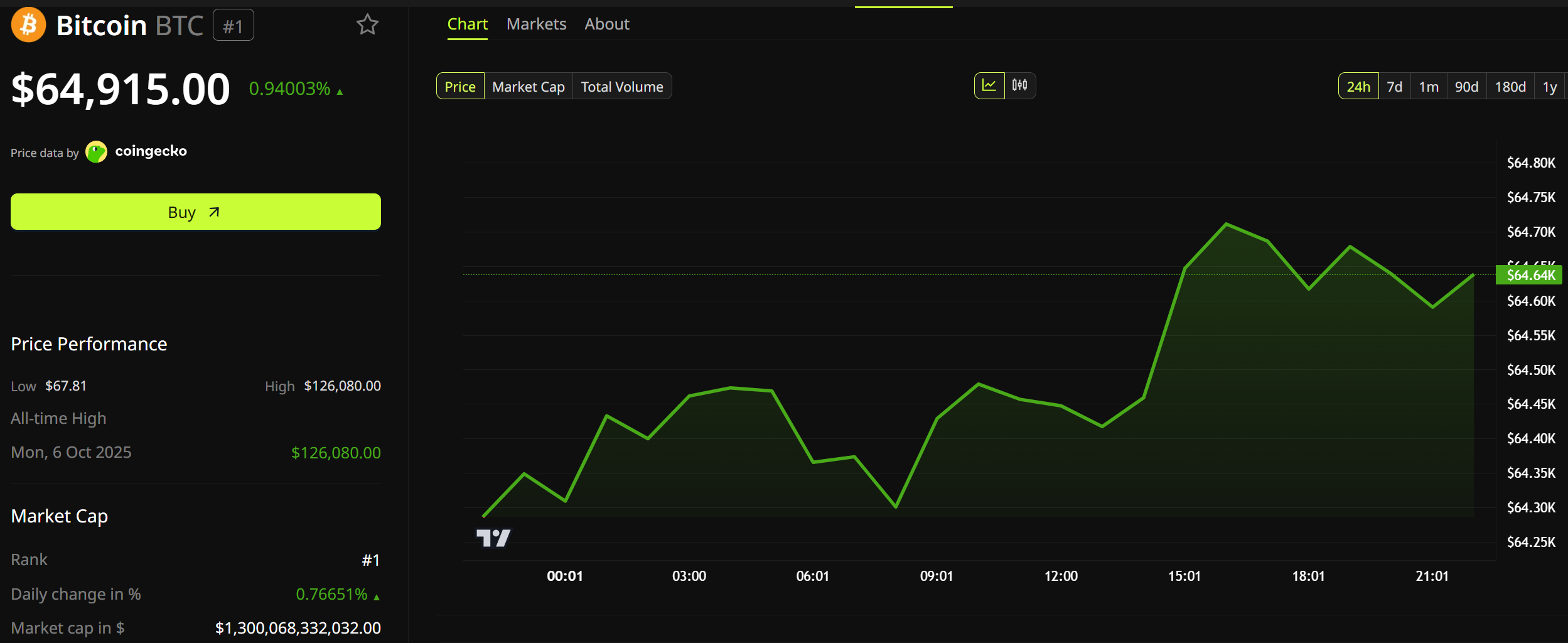
Economists Say Hold, Traders Aren't So Sure
The Fed's benchmark rate has sat in a range of 3.50% to 3.75% for four consecutive meetings, and the FactSet consensus says it stays there this week. Reuters polled 104 economists in mid-July, and all 104 predicted a hold; 78 of them expect no change through the end of December.
Futures markets tell a different story. Fed funds futures priced just a 13% chance of a rate increase a week ago. That probability jumped to 38% by Friday and now sits near 36%. Notably, the same panel of economists has also shifted: most now assign high odds to a hike later in 2026, versus low odds a month ago.
"We are currently seeing the biggest indecision by the markets regarding the expected outcome for some time," analyst The Martini Guy noted.
Part of the uncertainty traces back to Fed Chair Kevin Warsh, who has stopped signaling what comes next, and to the Fed itself, which will not publish updated economic forecasts alongside this week's decision.
"Absent, also, is so-called forward guidance, which we agreed was not well suited to the current policy conjuncture," Warsh has said.
Gregory Daco of EY-Parthenon calls a hike this week unlikely but puts the odds for the rest of the year at roughly 60-40. Former Fed governor Larry Meyer expects a hold as well, but expects Fed officials Lorie Logan and Beth Hammack to dissent from that decision.
Oil and Tariffs Are Driving the Inflation Scare
Oil prices are a big part of the trigger. Brent crude closed at $100.69 on July 23, its first close above $100 a barrel since May 26, and prices are up more than 30% this month, though a weekend pause in Iran strikes has calmed the market somewhat. New tariffs added to the pressure: on Friday, the U.S. imposed fresh import taxes of 10% and 12.5% on goods from 60 trading partners, replacing tariffs the Supreme Court had struck down in February.
Bond markets have already repriced around that risk. The 10-year Treasury yield closed Friday at 4.69%, its highest level since January 2025, while the more rate-sensitive two-year yield ended the week at 4.33% — above the Fed's own 3.75% ceiling.
What a Surprise Would Mean for Bitcoin
With bonds paying nearly 4.7%, risk assets like Bitcoin look comparatively less attractive, which has helped cap prices for most of the month. A rate increase would be the Fed's first since July 2023, ending three years of holds and cuts. A calm hold, by contrast, could give Bitcoin room to move; the asset stalled near $66,000 earlier this month as AI-driven inflation worries capped the rally. Warsh is scheduled to speak 30 minutes after Wednesday's decision, and with forecasters and traders this far apart, his tone may end up mattering more than the vote itself.