Highlights
- The SEC's new "Innovation Exemption" lets approved Tokenized Securities Venues (TSVs) trade tokenized NMS stocks through automated market makers without registering as exchanges
- A matching exemption frees AMM liquidity providers using their own capital from the "dealer" definition
- Synthetic stock tokens, which mirror price without carrying real shareholder rights, are excluded entirely
- Issuers get a 30-day window to object before their shares can be tokenized on any venue
- The relief runs five years, expiring in September 2031, while the SEC collects data toward permanent rules
The Securities and Exchange Commission opened a legal pathway on Wednesday for tokenized versions of stocks like Apple and Tesla to trade directly on blockchain venues, issuing a temporary, conditional order that lets qualifying platforms skip full exchange registration. Chair Paul Atkins called it a step to "bring America's capital markets into the digital age," and the order takes effect immediately rather than waiting for the usual notice-and-comment cycle that precedes permanent rulemaking.
The mechanism is narrow by design. A trading venue that believes it qualifies as a Tokenized Securities Venue, or TSV, doesn't need pre-approval — it files notice with the agency and can begin operating, provided it meets a list of conditions: public disclosure of its trading data, synchronized trading halts with the stock's primary listing exchange, recordkeeping, technology safeguards, and caps on both the number of stock symbols and the trading volume it can carry, scaled to each stock's normal limit-up/limit-down band. Smart contracts used by a TSV must be public, auditable, and deployed on a permissionless ledger rather than a private one.
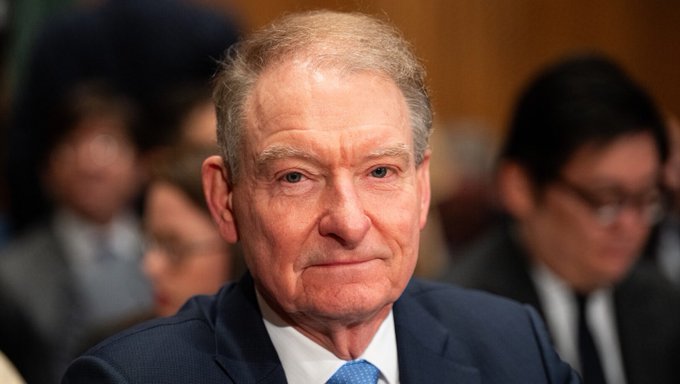
A companion piece of the order exempts certain liquidity providers from being treated as securities dealers when they supply tokenized shares to an AMM pool using their own capital — the design most DeFi-style venues rely on instead of a traditional order book. SEC Commissioner Mark Uyeda framed the whole structure as an experiment rather than a settled answer, writing in his own statement that transaction data — price, size, time, pool address, end-of-day pool size, daily volume — will be made public at regular intervals so the agency can learn from real trading before it writes anything permanent. "The goal should be to focus on outcomes and have technology-neutral regulation," he wrote, in a statement published alongside the order.
One category got no relief at all: synthetic stock tokens, which give a trader price exposure to a stock without any of the underlying rights — no dividends, no vote, no claim on the actual share. An SEC spokesperson was blunt about why, telling reporters the agency saw "very little interest on the derivative side" domestically and that synthetic products "can remain out in the wilds" for now. That line sits on top of a live industry dispute — Robinhood CEO Vlad Tenev and AMC's Adam Aron have sparred publicly over synthetic equity tokens Robinhood has issued to customers outside the US — and the exemption's 30-day issuer-objection window looks like a direct answer to a request the Securities Transfer Association made in July, when it asked the SEC to require issuer sign-off before any of its shares could be tokenized.
Related: Bitcoin Crashes Below $76K as CLARITY Act Fails Senate Vote
The timing is hard to separate from Congress's own gridlock. The order landed three days after the Senate's cloture vote on the CLARITY Act, the broader market-structure bill crypto firms had spent much of the year lobbying for, failed 49-50. Atkins referenced that failure directly, noting the exemption gives the agency a way to move on tokenization without waiting on legislators. It's also not a one-off: the SEC has a separate proposal in progress to overhaul transfer agent rules for tokenized securities for the first time since the 1970s, and regulators elsewhere are already flagging friction — an EU regulator has warned that competing tokenized clones of the same stock could fragment liquidity rather than concentrate it.
For now, the exemption is a starting gun rather than a finish line. It expires automatically in five years unless the SEC turns the pilot into a permanent rule before then, and the agency is explicitly asking for public comment — metrics, incident reports, operational narratives — while the first TSVs decide whether to file notice and start trading.