Oil prices tumbled Sunday after a senior Iranian official told Reuters that Tehran would halt its own attacks as long as the United States keeps its bombing pause in place, easing nearly two weeks of escalating conflict in the region.
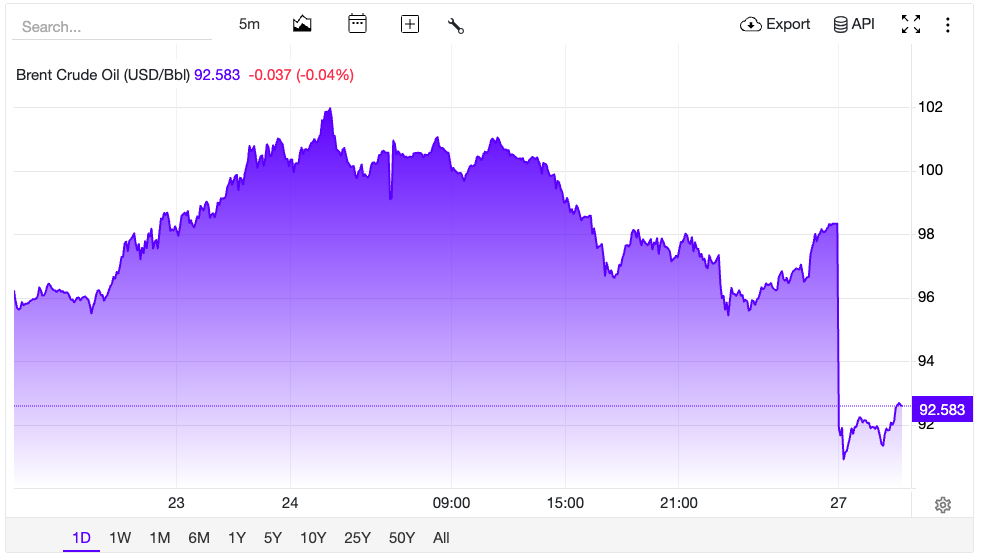
Brent crude fell more than 7% to touch a low of $90.9 a barrel, while West Texas Intermediate dropped as much as 7% to $84. Both benchmarks had been trading well above $100 less than 24 hours earlier, making the reversal one of the sharpest single-day moves in the recent conflict-driven rally.
Tehran Sets Conditions for the Pause
The Iranian source described Tehran's stance as "attack for attack," telling Reuters that Iran would stop operations once the US stops, and that Tehran had already passed that message to Washington. The framing leaves the truce contingent on continued US restraint rather than signaling a broader de-escalation.
There is more scepticism than optimism about the halt in attacks. The prevailing view is that the pause is tactical rather than genuine.
The pause follows Washington's decision to suspend its bombing campaign after 13 nights of US strikes. Advisers reportedly warned President Trump that the military was running low on viable targets and raised concerns about depleting weapons stockpiles. US Ambassador to the United Nations Mike Waltz said Trump chose the pause to give diplomacy room, even as Iranian officials voiced more doubt than hope that the calm would last.
Related: Fed Rate Call Splits 104 Economists From Traders Betting on a Hike
Fed Watching the Inflation Risk
The oil move carries implications beyond energy markets. HSBC US rates strategist Dhiraj Narula said pricier oil has revived bets that the Federal Reserve may hold interest rates higher for longer. Narula noted that inflation expectations have stayed contained so far, crediting firm Fed messaging on price stability for keeping the energy rally from feeding into longer-term inflation forecasts.
Watching for Follow-Through
Brent held near $92 a barrel into Monday, confirming that Sunday's drop stuck rather than snapping back overnight. Whether the halt lasts through the week will test if Tehran's skepticism proves justified, or if the pause develops into a more lasting de-escalation that keeps oil-driven rate-hold bets from gaining further traction.