Highlights
- Hunter Biden's LAPTOP memecoin crashed 98% within an hour of its September 9 Base launch, wiping out an implied $1.6 billion valuation.
- The LAPTOP Foundation injected 4 million tokens, about 0.4% of supply, into an Aerodrome liquidity pool on September 10 to stabilize trading.
- Two prediction-linked tokenomics events resolved “yes,” triggering a 10 million-token burn, roughly 1% of supply, within LAPTOP's first week.
- Lookonchain tracked a trader who spent $170,000 buying the dip at $5.97 per token — a position now down 87% further, worth about $21,000.
A Rescue Op for a Rocky Launch
Hunter Biden's LAPTOP memecoin, which briefly touched an implied $1.6 billion valuation before collapsing 98% within its first hour on Base on September 9, 2026, is now the subject of a foundation-led rescue effort. Early on September 10, the LAPTOP Foundation began routing four million LAPTOP tokens — about 0.4% of the coin's 1 billion total supply — into an Aerodrome liquidity pool, an incentive meant to stabilize a market that buckled almost immediately under demand and front-running bots. The foundation also confirmed that two prediction-linked events tied into LAPTOP's tokenomics have now resolved “yes,” triggering a burn of 10 million LAPTOP, roughly 1% of supply, within the token's first week of trading. The moves came as Lookonchain flagged a trader who spent $170,000 buying into the initial crash — and is now down another 87%.
Why the Pool Ran Dry
The chaos traces back to LAPTOP's launch structure. According to the foundation's own account, the token's initial liquidity pool was seeded at $0.05 per token, a level that proved wildly insufficient once trading demand — and a wave of sniping and front-running bots — hit all at once. CoinDesk reported LAPTOP's price move from that implied $1.6 billion market cap to a fraction of a cent inside its first hour, one of the more violent memecoin debuts of 2026, with liquidity far too thin to absorb the swings in either direction.
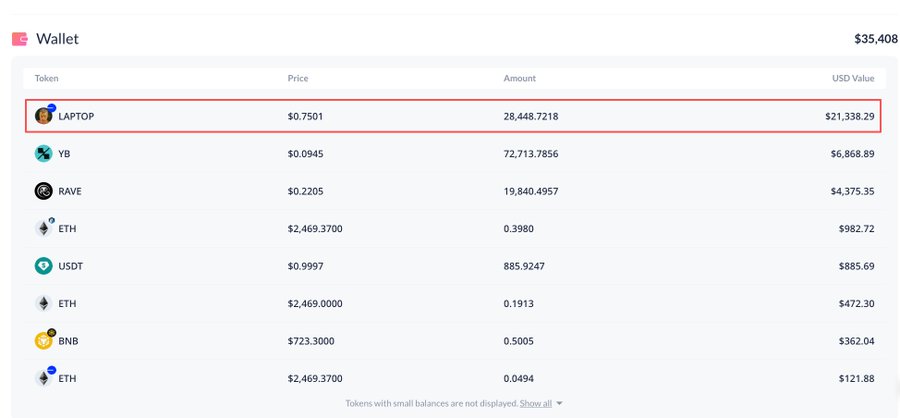
Onchain analytics account Lookonchain flagged one wallet that spent $170,000 to acquire 28,448.72 LAPTOP at $5.97 apiece — an attempt to buy what looked like a bottom. Instead, that position has cratered a further 87%, now worth roughly $21,000, underscoring how violently the token has continued to reprice even after its initial implosion. LAPTOP's broader design already built in scheduled burns tied to real-world outcomes — including a fresh Bitcoin all-time high and LAPTOP's fully diluted value overtaking that of the TRUMP token — and the foundation says two such prediction conditions have now resolved “yes,” activating the 10 million-token burn inside the token's first week on the market.
What It Means for Memecoin Liquidity
For traders, the sequence is a case study in what happens when a celebrity-branded memecoin launches without liquidity depth to match its hype. LAPTOP's own tokenomics — a six-month lock on founder tokens, airdrops split between an immediate claim and a delayed round, and burn-or-charity conditions pegged to political and market outcomes — were designed to manage supply over time, not to cushion a first-hour liquidity crunch. The Aerodrome injection is a direct acknowledgment that market makers were unprepared for the scale of demand, placing LAPTOP alongside other high-profile launches this year where thin day-one liquidity turned modest sell pressure into 90%-plus drawdowns within minutes.
Related: Hunter Biden's LAPTOP Token Rockets to $314B, Crashes Within Minutes
The episode also feeds a running theme around politically branded tokens: LAPTOP was explicitly built to draw in holders of the TRUMP token through its airdrop structure, tying its fortunes to a rival coin's price action as much as to its own fundamentals. For a memecoin market that has already seen repeated flameouts this year, LAPTOP's stumble — followed by a foundation actively defending the token rather than walking away — is a rare case of a team publicly committing capital and a burn schedule to hold a community together after a launch goes wrong.
What Comes Next
The immediate marker to watch is whether the 4 million LAPTOP liquidity injection actually narrows the token's trading range in the days ahead, or simply gets absorbed by continued selling from traders who bought into the initial crash. The 10 million-token burn, due within LAPTOP's first week of trading — meaning by roughly September 16, 2026 — will be the next concrete test of whether the foundation's supply-management mechanics can offset ongoing volatility. Beyond that, LAPTOP's tokenomics point to two much larger burn triggers still outstanding: a fresh Bitcoin all-time high and LAPTOP's fully diluted valuation overtaking TRUMP's, either of which would force a further supply reduction if they land.
FAQ
What caused LAPTOP's price to crash 98% on launch?
LAPTOP's initial liquidity pool was seeded at just $0.05 per token, a level that could not absorb the demand and front-running bot activity that hit immediately after the September 9, 2026 Base launch, according to the LAPTOP Foundation.
What is the LAPTOP Foundation doing to fix the liquidity problem?
On September 10, the foundation began routing 4 million LAPTOP tokens, about 0.4% of the 1 billion total supply, into an Aerodrome liquidity pool as a stabilization incentive.
Why are 10 million LAPTOP tokens being burned?
LAPTOP's tokenomics tie scheduled burns to prediction-linked events. Two of those events have now resolved “yes,” triggering a burn of 10 million tokens, roughly 1% of total supply, within the token's first week of trading.
How much has the dip-buying trader Lookonchain tracked lost?
The trader spent $170,000 to buy 28,448.72 LAPTOP at $5.97 each after the initial crash. That stake has since fallen another 87%, leaving it worth about $21,000.